
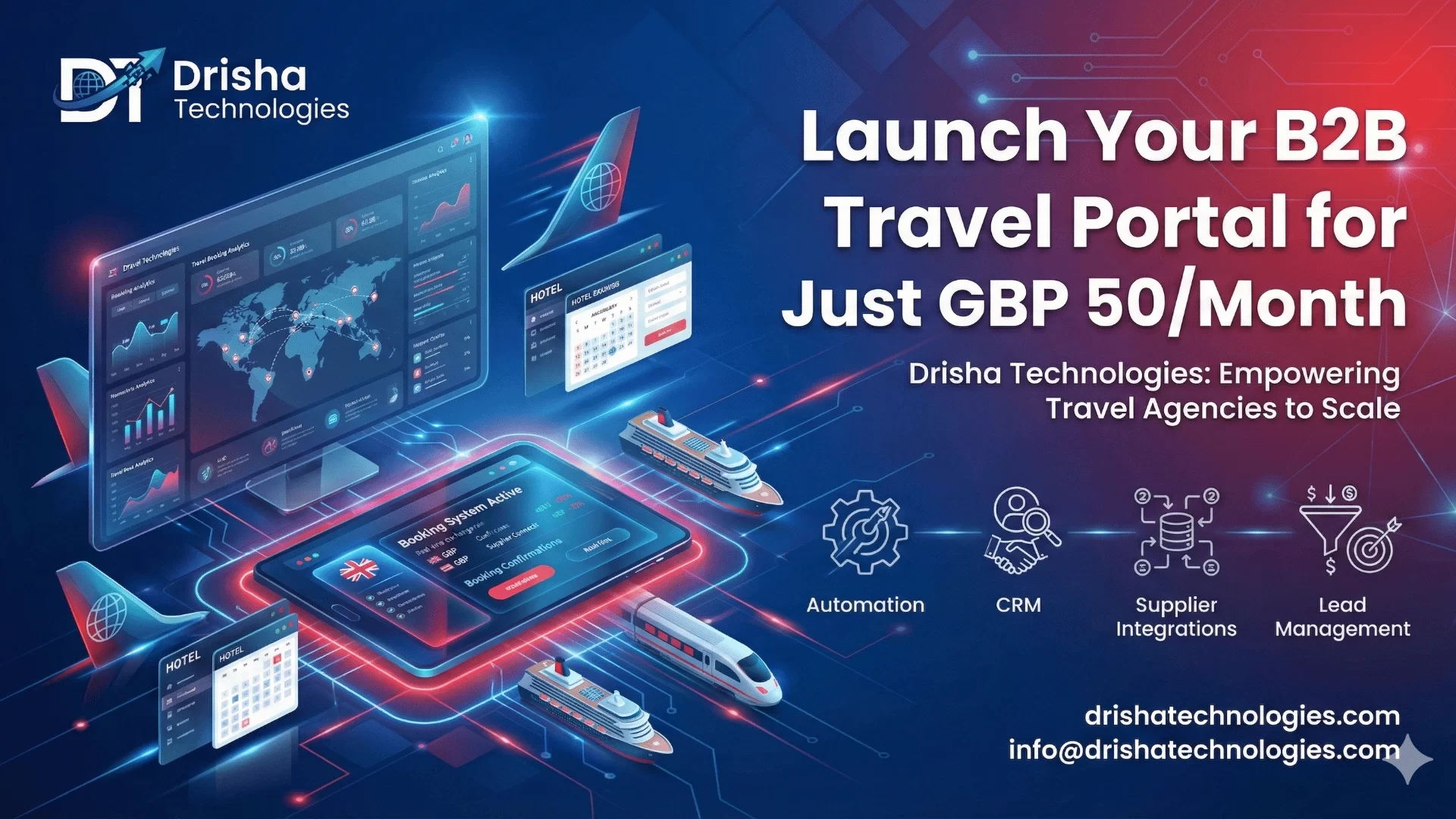
The travel industry has undergone tremendous transformation in recent years, and managing customer relationships has become more complex than ever. Travel agencies today need robust technology solutions to handle bookings, customer inquiries, itinerary management, and follow-ups seamlessly. This is where a best travel CRM becomes indispensable for agencies looking to scale their operations and deliver exceptional customer experiences.
At Drisha Technologies, we understand the unique challenges travel agencies face. In this comprehensive guide, we’ll explore what makes a travel CRM essential, key features to look for, and how to choose the right solution for your agency in 2025.
Why Travel Agencies Need Specialized CRM Software

Managing a travel agency involves juggling multiple tasks simultaneously: handling customer inquiries, creating customized itineraries, managing bookings across various suppliers, tracking payments, and maintaining relationships with clients for repeat business. A generic CRM simply won’t cut it for these specialized needs.
A dedicated CRM for travel agencies streamlines these processes by centralizing customer data, automating routine tasks, and providing insights that help you serve your clients better. The right CRM transforms how you manage relationships, turning one-time travelers into lifelong customers.
Essential Features of the Best Travel CRM
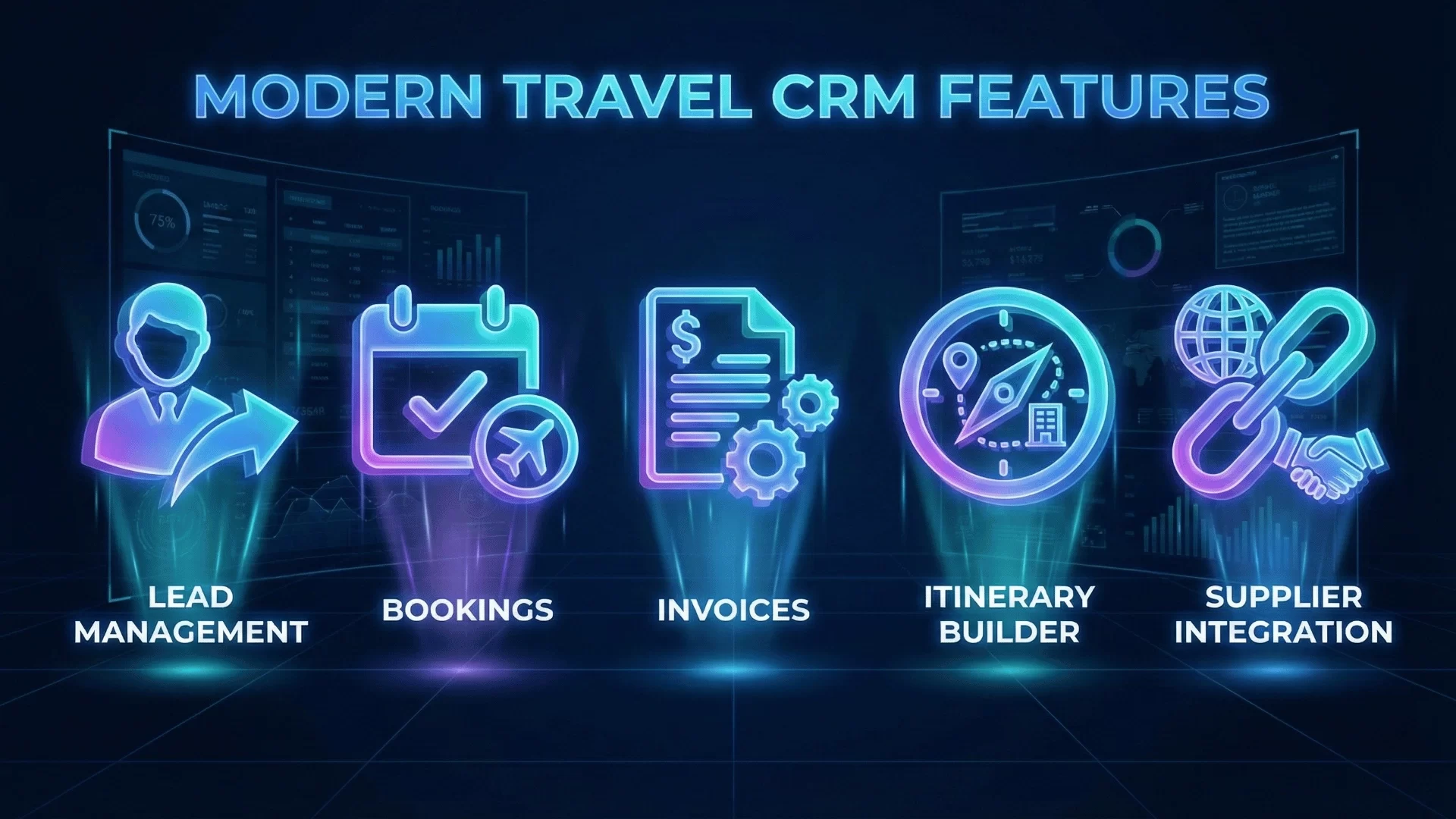
When evaluating CRM solutions for your travel agency, certain features are non-negotiable. The best travel CRM should offer comprehensive booking management that integrates with multiple suppliers and consolidates all reservations in one place. This eliminates the chaos of managing bookings across different platforms and reduces the risk of errors.
Customer profiling capabilities are equally crucial. Your CRM should maintain detailed records of customer preferences, past trips, special requests, and communication history. This information becomes invaluable when creating personalized travel experiences that keep clients coming back.
Automated communication tools help maintain consistent touchpoints with customers throughout their journey. From initial inquiry confirmation to post-trip follow-ups, automation ensures no customer falls through the cracks while freeing your team to focus on high-value interactions.
Payment tracking and invoicing features simplify financial management by monitoring deposits, installments, and final payments. The best systems integrate with accounting software to provide a complete financial picture of your operations.
Mobile accessibility has become essential in 2025, as travel agents often work on the go. A cloud-based CRM with mobile apps enables your team to access customer information, respond to inquiries, and update bookings from anywhere.
Top Considerations When Choosing an Affordable Travel CRM

Budget constraints are real, especially for small to mid-sized agencies. Finding an affordable travel CRM doesn’t mean compromising on essential features. The key is identifying which capabilities matter most for your specific business model.
Start by assessing your agency’s size and growth trajectory. An affordable solution for a boutique agency with five agents will look different from what a rapidly growing agency with multiple locations needs. Consider scalability – can the CRM grow with you without requiring a complete system overhaul?
Implementation and training costs often surprise agencies. When calculating affordability, factor in onboarding time, staff training requirements, and any customization needs. Some CRM providers offer extensive support during implementation, which can significantly reduce hidden costs.
Integration capabilities impact both functionality and cost-effectiveness. Your CRM should connect seamlessly with the booking engines, payment gateways, email marketing tools, and accounting software you already use. Poor integration leads to duplicate data entry, which wastes time and increases error rates.
How Travel CRM Software Improves Agency Performance
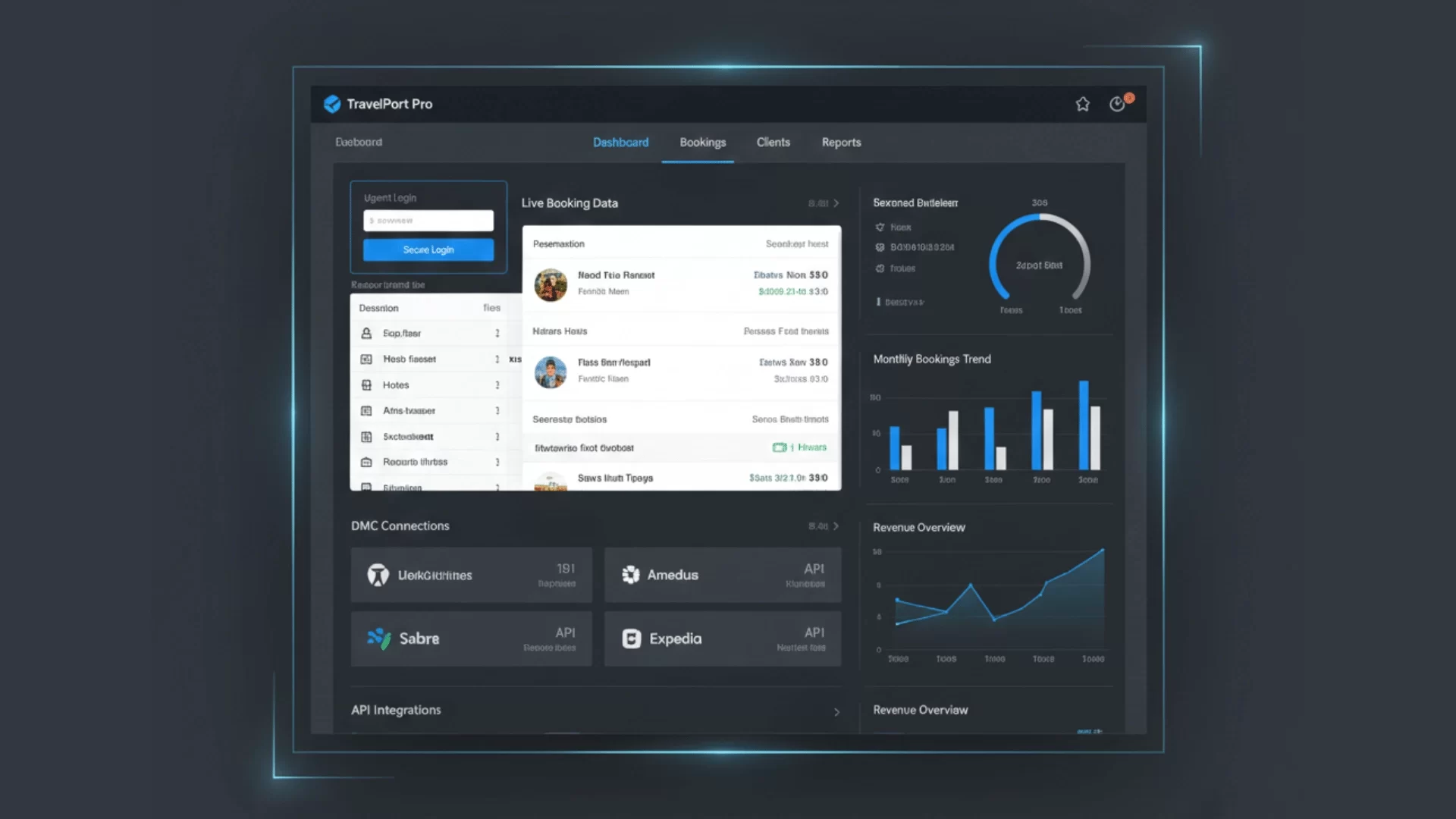
The impact of implementing the right CRM extends far beyond organized data. Agencies report significant improvements in conversion rates when they can respond quickly to inquiries with personalized proposals based on customer preferences stored in their CRM.
Customer retention improves dramatically when your team has instant access to travel history and preferences. Imagine contacting a client on their travel anniversary with a personalized offer for their next adventure, all automated by your CRM. These thoughtful touches build loyalty and drive repeat business.
Operational efficiency gains translate directly to your bottom line. Tasks that once took hours, such as creating detailed itineraries or generating quotes, can be completed in minutes with the right CRM tools. This efficiency allows your team to handle more clients without sacrificing service quality.
Data-driven decision making becomes possible when your CRM provides analytics on sales trends, popular destinations, customer acquisition costs, and agent performance. These insights help you allocate resources effectively and identify growth opportunities.
Key Trends in Travel CRM for 2025
The travel CRM landscape continues to evolve rapidly. Artificial intelligence and machine learning are now integral to leading platforms, offering predictive analytics that help agencies anticipate customer needs and optimize pricing strategies.
Enhanced automation has moved beyond basic email sequences. Modern travel CRMs can handle complex multi-step workflows, from initial inquiry through post-trip surveys, with minimal manual intervention. This level of automation allows even small teams to deliver enterprise-level service.
Personalization engines use customer data to automatically generate tailored recommendations and marketing messages. The best travel CRM systems in 2025 don’t just store customer preferences; they actively use this information to create unique experiences for each traveler.
Integration depth has expanded significantly. Today’s CRM solutions connect with a broader ecosystem of travel technology, including dynamic packaging tools, travel insurance providers, visa processing services, and emerging technologies like virtual reality destination previews.
Making the Right Choice for Your Agency
Selecting a CRM is a significant decision that will impact your operations for years. Begin with a thorough needs assessment involving your entire team. Agents, managers, and support staff all interact with the CRM differently, and their input ensures you choose a solution that works for everyone.
Request demonstrations from multiple vendors and test the systems with real scenarios from your agency. Pay attention to user interface intuitiveness, as a complicated system will face resistance from your team regardless of its capabilities.
Check references from agencies similar to yours in size and specialty. A CRM that works well for luxury travel agencies might not be the best fit for adventure travel specialists or corporate travel management.
Consider the vendor’s commitment to the travel industry. Companies that specialize in travel technology understand your unique challenges better than those offering generic CRM solutions adapted for travel.
Partner with Drisha Technologies
At Drisha Technologies, we specialize in helping travel agencies implement and optimize CRM solutions that drive real business results. Our team understands that choosing the best travel CRM involves balancing functionality, affordability, and ease of use.
We work closely with agencies to assess their specific needs, recommend appropriate solutions, and provide ongoing support to ensure you maximize your CRM investment. Whether you’re looking for an affordable travel CRM for a startup agency or a comprehensive solution for an established operation, we have the expertise to guide you.
People Also Ask
Conclusion
The right CRM for travel agencies is no longer optional in 2025; it’s a competitive necessity. As customer expectations continue rising and the travel landscape becomes more complex, agencies need sophisticated tools to manage relationships effectively while maintaining the personal touch that makes travel special.
Investing in the best travel CRM for your agency pays dividends through improved efficiency, higher customer satisfaction, and increased revenue. The key is finding a solution that matches your specific needs, budget, and growth ambitions.
For more information about travel CRM solutions and how Drisha Technologies can support your agency’s digital transformation, reach out to our team of experts today.
Ready to transform your travel agency with the perfect CRM solution?
Contact Drisha Technologies today, and let’s discuss how we can help you find and implement the best travel CRM for your agency’s success in 2025 and beyond.
Reach out to us for a free consultation or demo.
Email: info@drishatechnologies.com
Website: https://drishatechnologies.com